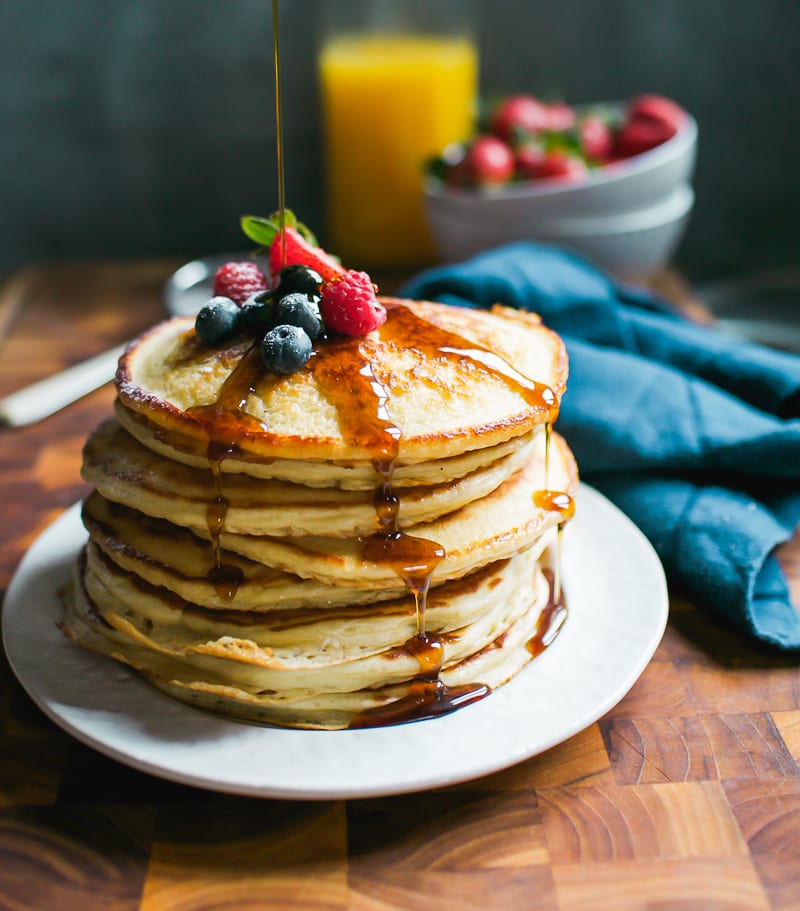
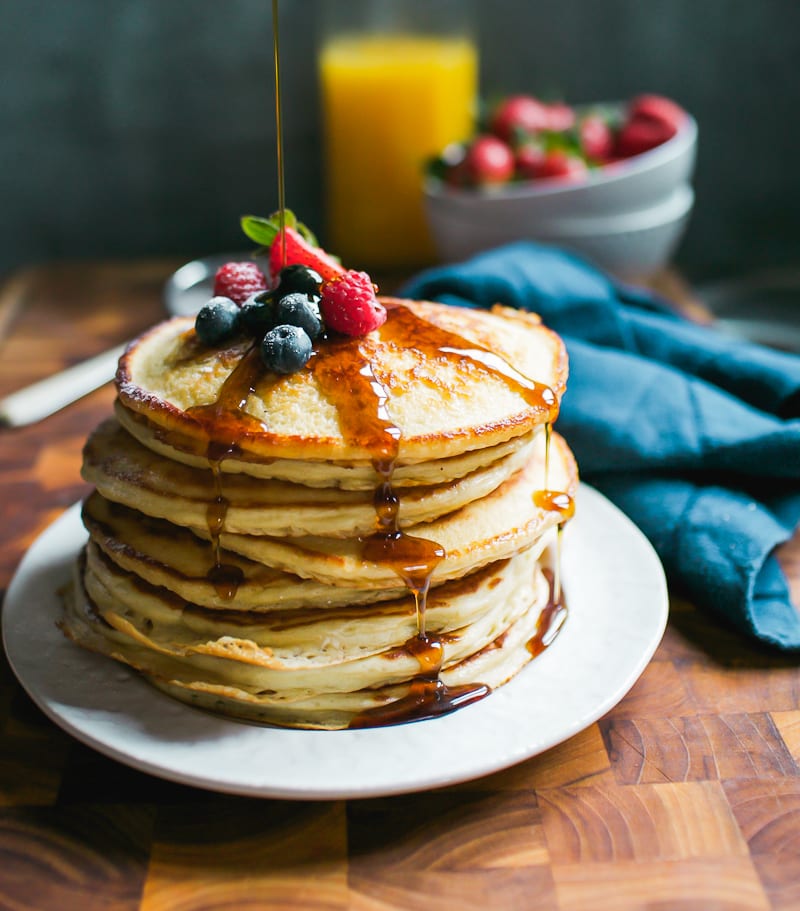
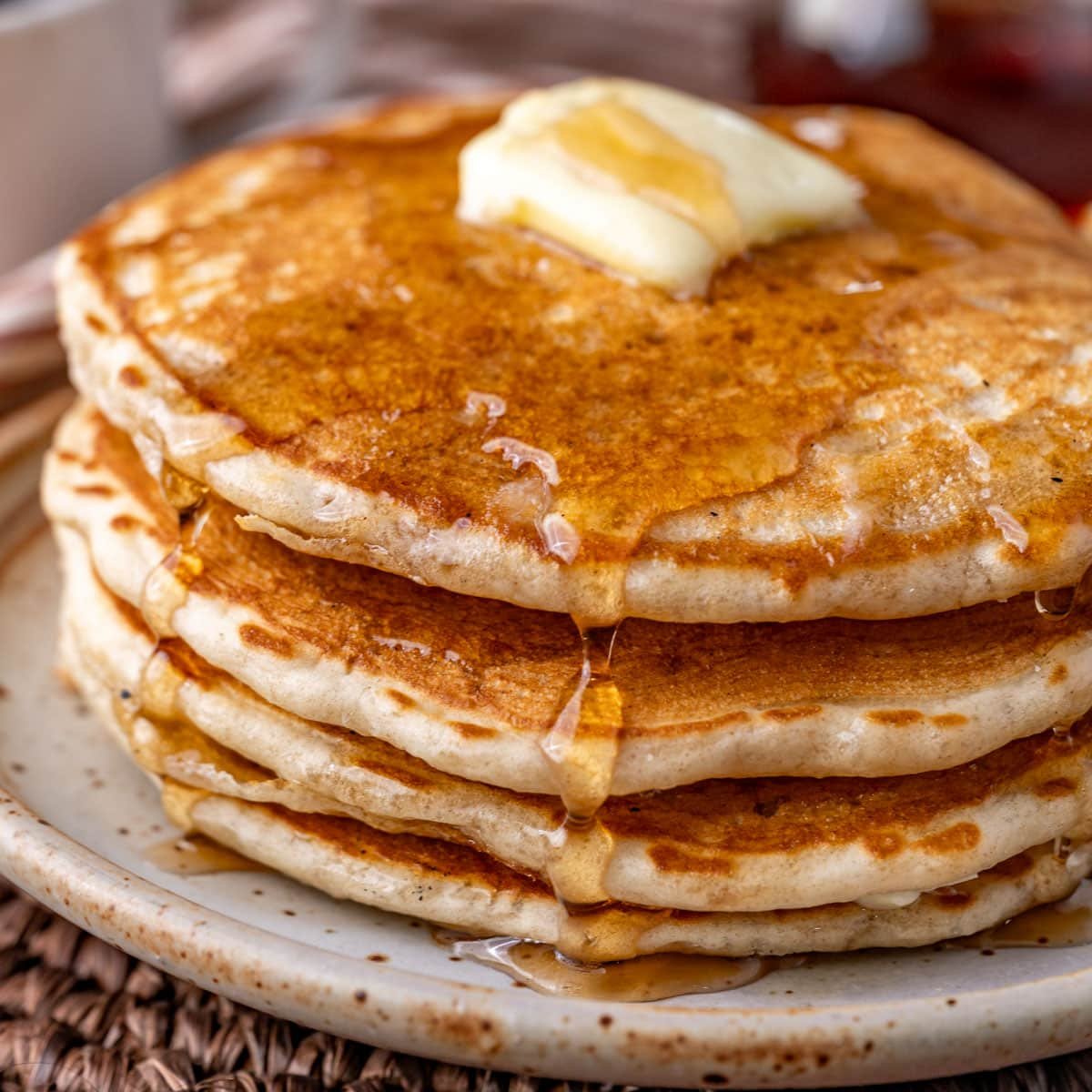
These fluffy sourdough pancakes deliver a delicate tang that elevates the classic breakfast favorite into something truly special. Made with active sourdough starter, they’re naturally leavened and incredibly light, with a subtle complexity that pairs beautifully with both sweet and savory toppings. The exterior crisps up gorgeously in the pan while the interior stays wonderfully tender, creating the perfect textural contrast. Best served warm and gooey, these pancakes are a sourdough lover’s dream come true.
Sourdough pancakes represent the perfect marriage of fermented bread traditions and breakfast comfort. With roots in both European sourdough culture and American breakfast traditions, these pancakes harness the natural leavening power of sourdough starter to create a stack that’s simultaneously light, fluffy, and deeply flavorful. The long fermentation process develops complex flavors that standard pancakes simply cannot achieve, making each bite an adventure.
What makes sourdough pancakes truly special is their digestibility and subtle tang. The fermentation process breaks down gluten and phytic acid, making them easier on your digestive system while developing a sophisticated flavor profile. Whether you’re a sourdough enthusiast looking to expand your starter’s repertoire or a pancake lover seeking breakfast innovation, these pancakes will absolutely impress your family and friends.
I’ve been perfecting this recipe for years, and I’m thrilled to share my foolproof method with you. The key lies in understanding how your sourdough starter behaves and timing your preparation perfectly. The result? Pancakes that taste like you’ve been up since dawn, when in reality, most of the work happens while you sleep.
Why You’ll Love This Recipe
- The subtle tang from sourdough starter adds sophisticated complexity that regular pancakes completely lack
- Naturally leavened with active starter, they’re lighter and fluffier than traditional recipes with no chemical aftertaste
- The fermentation process makes them easier to digest and more nutritious than conventional pancakes
- They taste like you’ve spent hours in the kitchen, but actually require minimal hands-on time
Ingredients
1 cup Active sourdough starter (fed and bubbly, at room temperature)
1 cup All-purpose flour (can use whole wheat for deeper flavor)
0.75 cup Milk (whole milk or buttermilk preferred)
2 large Eggs (room temperature for better incorporation)
2 tablespoons Honey or maple syrup (for sweetness and moisture)
1 teaspoon Baking powder (provides extra lift and fluffiness)
0.5 teaspoon Baking soda (neutralizes sourdough acidity)
0.5 teaspoon Salt (enhances all flavors)
3 tablespoons Unsalted butter (melted, plus more for cooking)
1 teaspoon Vanilla extract (optional but recommended)
0.25 teaspoon Cinnamon (adds warmth and depth)
pinch whole spice Nutmeg (freshly grated if possible)
Instructions
In a large mixing bowl, whisk together your active sourdough starter, milk, eggs, melted butter, honey, and vanilla extract until well combined. Make sure the mixture is smooth and there are no lumps of starter remaining. This creates the foundation for your pancakes’ tender crumb and complex flavor.
💡 Use room temperature ingredients for the smoothest batter with no lumps or cold spots.
In a separate bowl, whisk together flour, baking powder, baking soda, salt, cinnamon, and nutmeg. Combine these thoroughly to ensure the leavening agents and spices are evenly distributed throughout the flour. This prevents pockets of uneven rising or flavor in your pancakes.
💡 Sift your dry ingredients if you have a sifter—it aerates the flour and creates lighter pancakes.
Create a well in the center of your dry ingredients and pour in the wet mixture. Using a spatula or wooden spoon, gently fold the ingredients together until just combined. Some small lumps are completely fine—overmixing leads to tough pancakes. Stop folding as soon as you don’t see dry flour streaks.
💡 Resist the urge to mix thoroughly; lumpy batter makes fluffier pancakes than smooth batter.
Let your batter rest for 5 minutes at room temperature. This allows the flour to fully hydrate and the leavening agents to begin their work. During this rest, the batter will thicken slightly and become easier to work with. This short rest is crucial for achieving optimal fluffiness.
💡 Use this time to prepare your toppings and preheat your serving plates in a low oven.
Place a non-stick skillet, griddle, or cast-iron pan over medium-high heat and lightly butter it. Allow it to preheat for 1-2 minutes until a drop of water sizzles immediately on contact. The correct temperature is essential—too cool and pancakes stay pale and dense; too hot and they burn before cooking through.
💡 Test the temperature with a tiny dollop of batter first; it should sizzle gently and brown in about 1 minute.
Pour 0.25 cup of batter for each pancake onto your hot griddle, spacing them about 2 inches apart. Cook for 2-3 minutes until the surface is studded with bubbles and the edges look set and slightly dry. The bottom should be golden brown when you peek underneath with a spatula. Don’t flip too early or your pancakes will be gummy.
💡 Wait for bubbles to form and pop on the surface before flipping for the fluffiest results.
Using a thin spatula, carefully flip each pancake and cook the second side for 1-2 minutes until golden brown. The second side cooks faster than the first, so watch carefully to prevent burning. The pancakes should puff up beautifully and feel springy to the touch when done. Transfer finished pancakes to your warm plate.
💡 A quick, confident flip ensures pancakes don’t fold or tear; use a thin, flexible spatula for best results.
Stack your warm sourdough pancakes on serving plates and serve immediately with your favorite toppings. Warm pancakes are best enjoyed fresh from the griddle when they’re at their fluffiest and most tender. Top with butter, maple syrup, fresh berries, whipped cream, or whatever your heart desires.
💡 Keep finished pancakes warm in a 200°F oven if you need to cook additional batches before serving everyone.
👨🍳 Chef’s Notes
The secret to exceptional sourdough pancakes lies in using a truly active, recently fed sourdough starter. Your starter should be bubbly and at peak activity when mixed into the batter—if it’s sluggish, feed it a few hours before cooking. The baking powder and soda work together to provide immediate lift while the sourdough starter adds fermented complexity and natural leavening. I always keep my finished pancakes warm in a 200°F oven rather than stacking them hot, which traps steam and makes them soggy. Remember that sourdough batter may behave differently based on your starter’s hydration and strength, so don’t be afraid to adjust liquid slightly if needed.
Tangy Sourdough Pancakes with Crispy Edges
These fluffy sourdough pancakes deliver a delicate tang that elevates the classic breakfast favorite into something trul…
Ingredients
- • 1 cup Active sourdough starter
- • 1 cup All-purpose flour
- • 0.75 cup Milk
- • 2 large Eggs
- • 2 tablespoons Honey or maple syrup
- • 1 teaspoon Baking powder
- • 0.5 teaspoon Baking soda
- • 0.5 teaspoon Salt
- • 3 tablespoons Unsalted butter
- • 1 teaspoon Vanilla extract
- • 0.25 teaspoon Cinnamon
- • pinch whole spice Nutmeg
Instructions
- In a large mixing bowl, whisk together your active sourdough starter, milk, eggs, melted butter, honey, and vanilla extract until well combined. Make sure the mixture is smooth and there are no lumps of starter remaining. This creates the foundation for your pancakes’ tender crumb and complex flavor.
- In a separate bowl, whisk together flour, baking powder, baking soda, salt, cinnamon, and nutmeg. Combine these thoroughly to ensure the leavening agents and spices are evenly distributed throughout the flour. This prevents pockets of uneven rising or flavor in your pancakes.
- Create a well in the center of your dry ingredients and pour in the wet mixture. Using a spatula or wooden spoon, gently fold the ingredients together until just combined. Some small lumps are completely fine—overmixing leads to tough pancakes. Stop folding as soon as you don’t see dry flour streaks.
- Let your batter rest for 5 minutes at room temperature. This allows the flour to fully hydrate and the leavening agents to begin their work. During this rest, the batter will thicken slightly and become easier to work with. This short rest is crucial for achieving optimal fluffiness.
- Place a non-stick skillet, griddle, or cast-iron pan over medium-high heat and lightly butter it. Allow it to preheat for 1-2 minutes until a drop of water sizzles immediately on contact. The correct temperature is essential—too cool and pancakes stay pale and dense; too hot and they burn before cooking through.
- Pour 0.25 cup of batter for each pancake onto your hot griddle, spacing them about 2 inches apart. Cook for 2-3 minutes until the surface is studded with bubbles and the edges look set and slightly dry. The bottom should be golden brown when you peek underneath with a spatula. Don’t flip too early or your pancakes will be gummy.
- Using a thin spatula, carefully flip each pancake and cook the second side for 1-2 minutes until golden brown. The second side cooks faster than the first, so watch carefully to prevent burning. The pancakes should puff up beautifully and feel springy to the touch when done. Transfer finished pancakes to your warm plate.
- Stack your warm sourdough pancakes on serving plates and serve immediately with your favorite toppings. Warm pancakes are best enjoyed fresh from the griddle when they’re at their fluffiest and most tender. Top with butter, maple syrup, fresh berries, whipped cream, or whatever your heart desires.